Colin Nagy | April 9, 2026
The Fishtail Parka Edition
On the Korean War, Mods, and The Real McCoy's.
Colin here. There’s a particular piece of clothing that manages to be simultaneously utilitarian and totemic, military-issue and subcultural signal, American in origin and quintessentially British in meaning.
The M-1951 fishtail parka was developed for the U.S. Army at the outbreak of the Korean War. The military needed something that could handle extreme, cold temperatures regularly dropping to minus-30, and the solution was a layered system: a cotton outer shell with a removable wool liner, a snorkel hood that could be cinched tight, and the split rear hem that gives the garment its name, which could be unsnapped and wrapped between the legs for additional insulation when stationary.
It was excellent kit, and did exactly what it was supposed to do. And then it ended up in surplus stores, which is where things got interesting.
Why is this interesting?
By the early 1960s, British mods had discovered it. Think Sting as Ace Face in Quadrophenia. The sartorial logic was initially practical: you were riding a Lambretta through the damp English air and needed something to protect your suit underneath. The parka solved the problem; it was cheap, long enough to cover your knees, and roomy enough to go over anything.
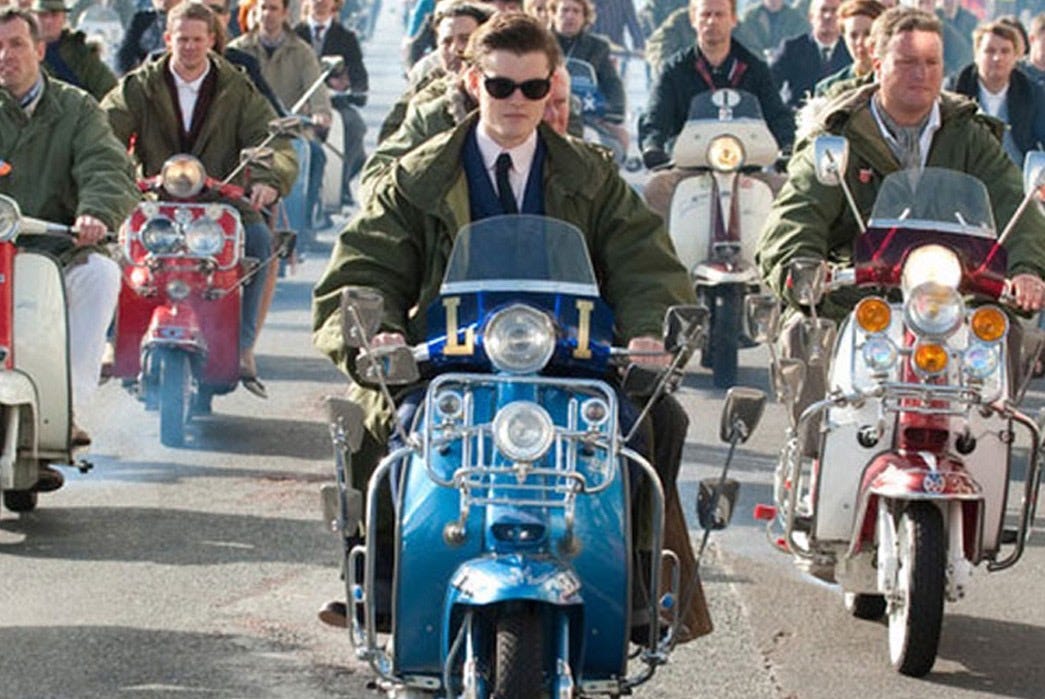
The fact that it was military surplus gave it an anti-fashion credential that suited the mod ethos to a T: specific taste expressed through found objects and unlikely combinations. The parka became the suit’s perfect foil. Mod style had a unique vibe that was fundamentally about precision—Italian tailoring filtered through working-class South London—and the parka introduced some deliberate contrast. It was a match made in heaven. When mods and rockers clashed on Brighton beach in 1964, news photos captured a generation’s uniform: parkas everywhere, often with roundels and target patches hand-painted on the back.
Which brings us to The Real McCoy’s. The Kobe-based label, founded in 1990, represents something specific about Japan’s relationship to American material culture. In the decades after the war, surplus U.S. military gear flooded Japanese markets, and a generation grew up with an almost archaeological fascination with the objects themselves: the stitching, the hardware, the fabric weight, the precise shade of olive drab.
What emerged was a cottage industry of reproduction specialists who approached American workwear and military garments the way a watchmaker approaches a complicated movement, with complete seriousness, no shortcuts, and a conviction that the original was worth getting exactly right.
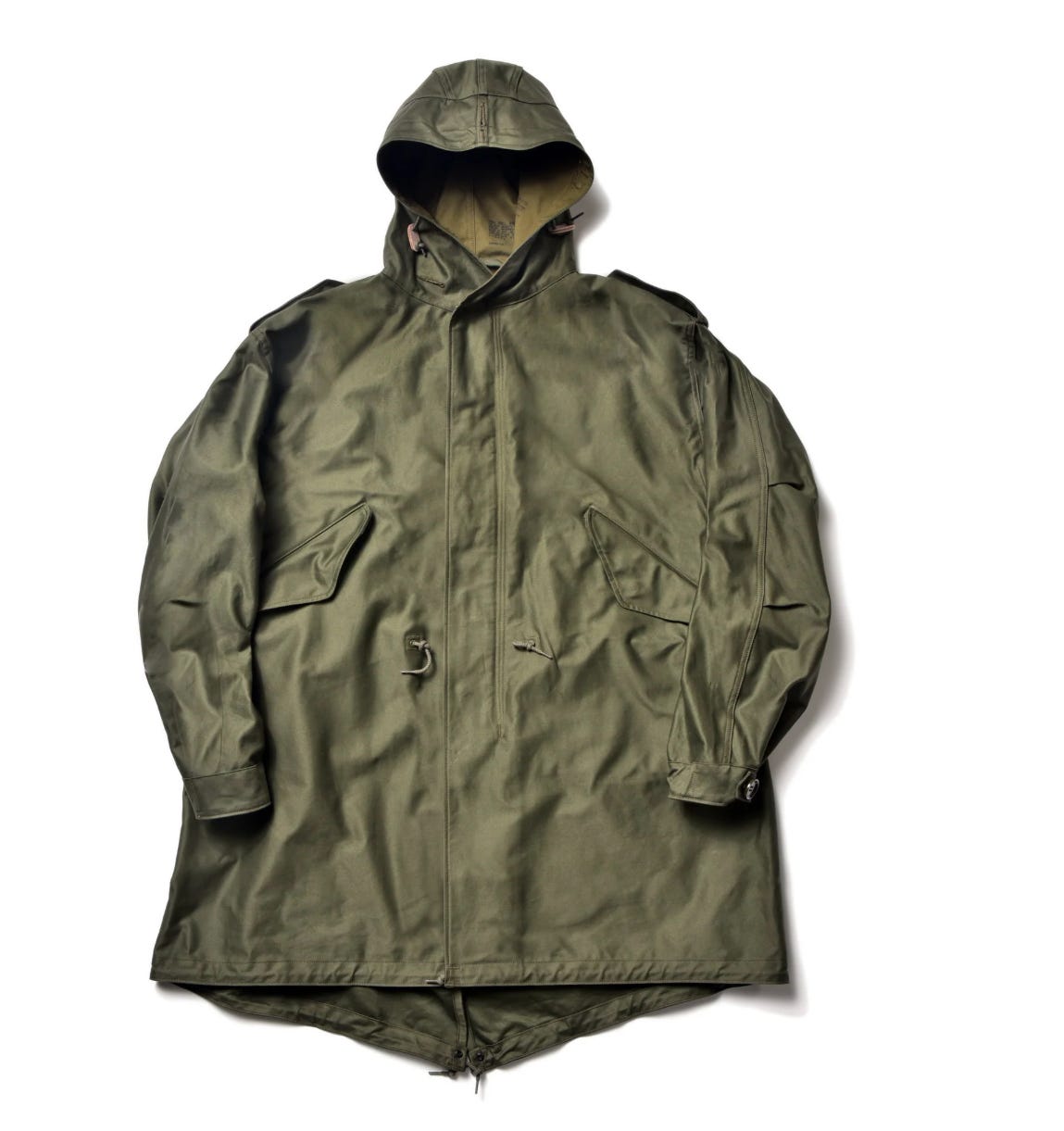
I recently picked one up, and it is a masterclass in this sensibility. Exactly the right cotton sateen, properly constructed liner (sold separately of course!), hardware matching the original spec, and a fishtail that functions as intended. It’s reverence expressed through craft, and the entire brand rolls this way. It also has, co-signed by by friend of WITI Chris Black, some of the best retail in the world in Tokyo.
Similar to how W. David Marx brilliantly dissected Ivy League style in Japan through his book Ametora, this is also a fun and unlikely story: an American military garment designed for a brutal winter war becoming the defining visual language of British youth rebellion, then preserved with obsessive fidelity by Japanese craftsmen who understand its worth better than most people in either of its origin countries. Objects (and culture) travel in strange ways. (CJN)