Colin Nagy | March 4, 2026
The Desalination Edition
On risk, humanitarian crisis, and H20.
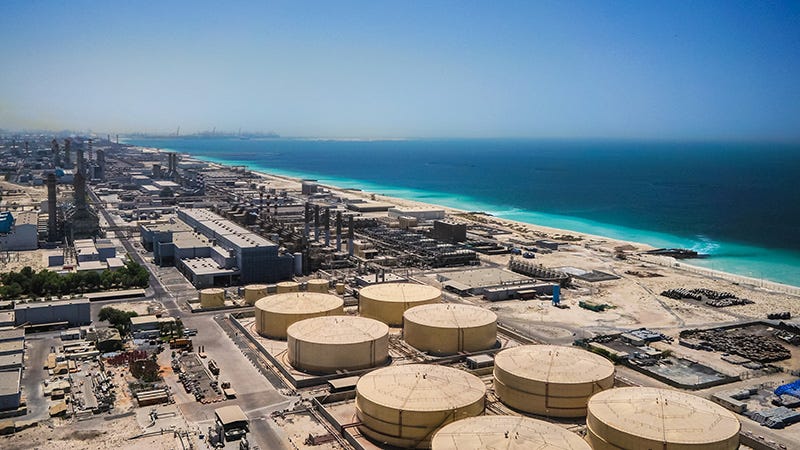
Colin here. There’s a stat that should reframe how you think about the Gulf conflict: Kuwait gets 90% of its drinking water from desalination plants. Oman, 86%. Saudi Arabia, 70%. The GCC collectively operates over 400 plants and produces roughly 40% of the world’s desalinated water. These aren’t supplementary systems. There are no permanent rivers or lakes in Saudi Arabia, Bahrain, Kuwait, the UAE, Oman, or Qatar.
When Iran’s retaliatory strikes hit Gulf capitals this weekend—drones on Qatar’s Ras Laffan LNG complex, debris fires at Saudi Aramco’s Ras Tanura refinery, missiles reaching Dubai’s skyline and Doha’s neighborhoods—most of the analysis focused on energy infrastructure and airspace closures. The Strait of Hormuz. Oil prices. But the real vulnerability isn’t energy exports. It’s water.
Why is this interesting?
These plants sit on exposed coastlines, within range of the same drones and missiles that have already hit the Burj al Arab, both Dubai and Abu Dhabi airports, and the US Embassy compound in Riyadh. And the margin for disruption is almost nonexistent. Qatar recently completed a mega-reservoirs project that extended its strategic water reserves from two days to seven. Saudi Arabia’s daily water consumption now exceeds its total storage capacity.
The precedent exists. In 1991, as the Iraqi army retreated from Kuwait, Saddam Hussein destroyed the country’s desalination plant and released oil into the Gulf, contaminating the wider region’s intake systems. That’s the compounding risk you don’t see in the missile-tracking coverage: you don’t have to hit a plant directly. An oil spill from damaged tankers or refineries could foul the seawater that feeds the entire desalination network. The Gulf is already roughly 25% saltier than typical ocean water, partly from decades of brine discharge from the desalination process itself. It’s an intake system operating with less margin than people realize.
Desalination is also energy-intensive by nature. Saudi Arabia burns approximately 300,000 barrels of oil per day just to power its plants. So even if the plants themselves aren’t targeted, sustained disruption to the power grid or fuel supply creates the same outcome through a different angle. Iran has already demonstrated willingness to strike power infrastructure in Qatar alongside the Ras Laffan attack.
What makes water different from every other infrastructure target is the speed of the humanitarian math. Knock out an LNG facility and energy prices spike, cargoes reroute, Europe scrambles—but people don’t die in days. Knock out desalination in a country where summer temperatures reach 50°C, there are no natural freshwater alternatives, and strategic reserves cover less than a week, and you have a crisis that no amount of air defense can reverse fast enough. As Monica Marks at NYU Abu Dhabi put it: without air conditioning and water desalination, these countries are essentially uninhabitable.
The deeper read is that this vulnerability explains the posture of the Gulf states better than any diplomatic cable. Their economic models—the airlines as super-connectors, the sovereign wealth diversification into tech and finance, the tourism megaprojects, Vision 2030—all depend on the perception of stability. Dubai, Abu Dhabi, and Doha spent decades constructing an image as oases insulated from the region’s crises. Iranian missiles slamming into Gulf skylines shattered that image over the weekend. But the desalination question takes it further: it’s not just reputation at risk, it’s the basic habitability of these cities if things go sideways. (CJN)